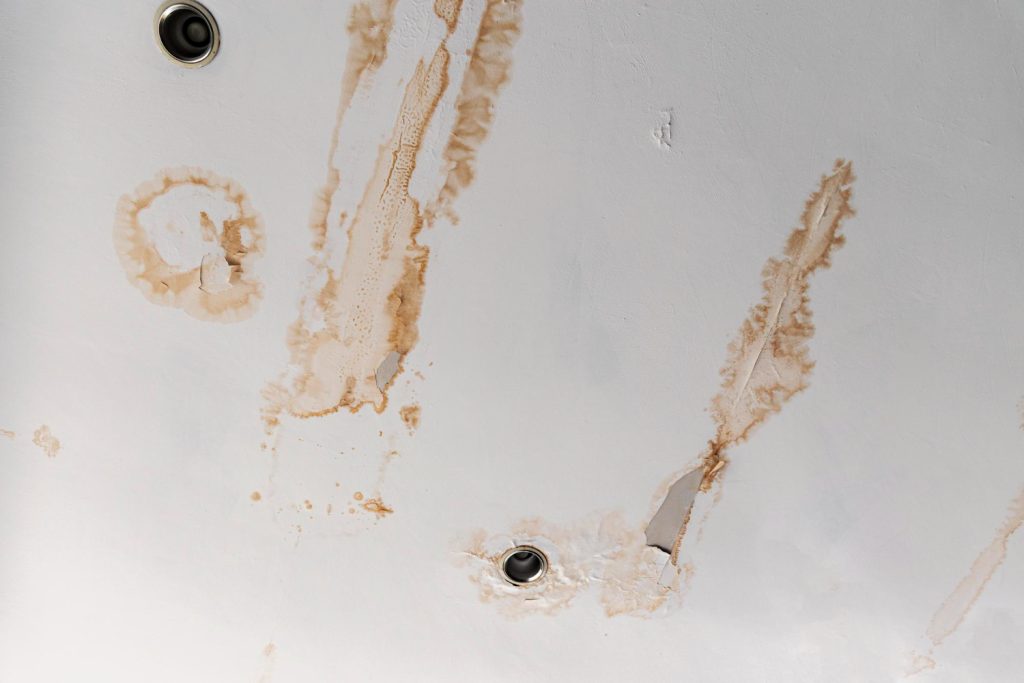
Roof leaks beside stucco walls often start where the roof meets the wall. Water can slip behind the exterior finish long before you see a ceiling stain or a damp spot indoors. When we inspect these areas, we look closely at the flashing system because it is meant to guide rain away from this vulnerable joint.
In Jacksonville, heavy rain, tropical weather, wind-driven showers, and humid air can put extra stress on roof-to-wall transitions. A small opening around flashing may seem harmless at first, but repeated moisture can spread through nearby roofing and wall materials.
Stop Hidden Stucco Wall Leaks Before They Spread
Stucco can hide a water problem well. Rain may enter at the roofline, move behind the stucco, and travel before it finally shows up inside. By that point, the original entry point may be difficult to spot without a focused roof and wall inspection.
We often see hidden moisture lead to problems such as stained ceilings, peeling paint, musty odors, mold growth, damaged roof decking, or weakened framing. Humidity can make it harder for damp materials to dry, allowing the problem to continue between storms.
Prompt inspections give us a chance to find small gaps, loose metal, and aging sealant before the repair grows into a larger roof or wall project. If a leak appears near a stucco wall, it is wise to treat it as a roof-to-wall issue until a professional inspection shows otherwise.
How Counterflashing Protects Stucco Roof Transitions
Counterflashing is the metal piece installed where a roof meets a wall. It works with base flashing, which is the flashing installed lower in the roof-to-wall joint. Together, these pieces create layers that shed water down onto the roof surface instead of letting it work its way behind the wall finish.
The system depends on correct overlap and placement. Water should move out and down, not become trapped behind metal, stucco, or roofing materials. Counterflashing also needs to connect properly with the wall system so rain cannot slip behind its upper edge.
A sound flashing detail generally includes:
- Metal that overlaps the base flashing correctly
- Secure attachment at the wall connection
- Properly placed sealant where the detail calls for it
- Clear paths for water to drain onto the roof
- No gaps, lifted edges, or loose sections
When counterflashing is in good condition, it helps protect both the roof and the wall assembly. When it fails, rain can enter an area that is not easy to see from the ground.
Why Counterflashing Failure Leaks Begin Behind Stucco
Counterflashing failure leaks can begin with a very small opening. Metal may pull away from the wall over time, fasteners can corrode, sealant can crack, or an installation gap can leave part of the joint exposed. Once rain gets past the flashing, it may reach the layers behind the stucco.
Damage near the roofline can create another path for moisture. Cracked stucco, worn wall sealant, and poorly finished flashing ends can all allow water to get behind the exterior surface. Strong rain does not need a large hole to cause trouble, especially when wind pushes water toward the wall.
Finding the source takes more than looking at the spot where water appears inside. Moisture can move along framing, sheathing, insulation, or other materials before it becomes visible. That is why we recommend professional diagnosis for counterflashing failure leaks rather than assuming the nearest stain marks the exact source.
Warning Signs of Counterflashing Failure Leaks
Some warning signs show up outside first. Rusted metal, lifted flashing edges, cracked sealant, dark streaks below the roofline, or gaps where the roof meets the stucco wall can all point to a problem. Damaged or cracked stucco near this connection also deserves attention.
Inside, the clues may be less obvious. You may notice a ceiling stain near an exterior wall, bubbling paint, warped trim, a musty smell, or a leak that returns after heavy rain. Even if the area dries between storms, the source may still be active.
Watch for these signs around the roof-to-wall joint:
- Loose, bent, rusted, or missing flashing
- Cracks or separation in stucco near the roofline
- Sealant that is split, shrinking, or pulling away
- New water stains near exterior walls or ceilings
- Recurring leaks after rain or strong wind
Repeated moisture exposure can affect shingles, underlayment, sheathing, insulation, and structural materials. Early evaluation helps keep a small flashing concern from spreading farther through the property.
Fall Storms Expose Weak Flashing Around Stucco
October can bring tropical systems, intense rain, and strong winds to Jacksonville. These conditions test flashing details that may seem fine during a lighter shower. Wind-driven rain can push into narrow openings around counterflashing, especially where metal has loosened or sealant has started to fail.
Aging flashing may also shift slightly during storms. If the stucco wall, roof materials, and flashing no longer meet tightly, water can find its way behind the exterior finish. The resulting leak may not appear until later, after moisture has had time to travel.
After a major storm, we recommend having roof-to-wall areas checked when you notice new exterior damage, water stains, or changes around the stucco. A focused inspection can identify whether the problem is limited to flashing or has reached nearby roofing and wall materials.
Schedule a Focused Roof and Wall Inspection
Leaks near stucco walls should not be ignored just because the stain is small or only appears during heavy rain. Counterflashing problems can stay hidden behind the wall finish while moisture continues to affect the roof and interior spaces.
A careful inspection of the roof-to-wall transition can help identify loose metal, failed sealant, damaged stucco, and other entry points. Addressing counterflashing failure leaks early can help limit damage to the roof, wall, and rooms below.
Protect Your Stucco Walls From Ongoing Water Damage
Interstate Roofing Jacksonville can evaluate vulnerable flashing details and recommend the right repair approach for your property. Get professional help with counterflashing failure leaks before moisture spreads behind the stucco. Contact us to discuss your roofing concerns and request an inspection.